
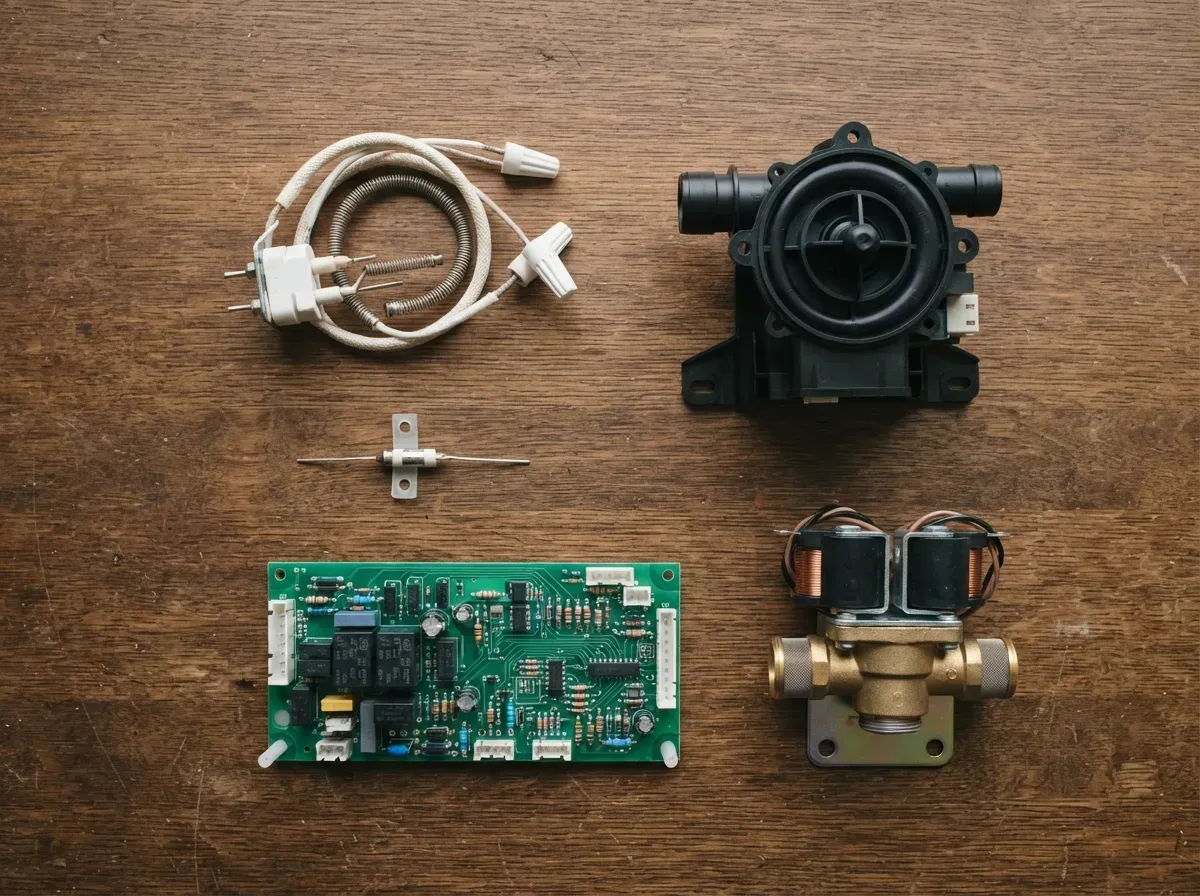
How Much Is Appliance Repair in San Antonio?
Appliance repair prices come down to the part and the labor time. Here's what pushes each one up, and when replacing beats repairing.
Appliance repair in San Antonio is priced from three things: the part, the labor time and how hard the appliance is to reach. There’s no honest flat price for “a fridge repair” or “a washer repair,” because a cheap thermal fuse and a costly control board can cause the very same symptom. What you can know up front is what drives the number and whether the appliance is worth fixing at its age.
Appliance repair labor rates in San Antonio
Federal wage data gives a sense of local labor. In May 2025, the Bureau of Labor Statistics put the median wage for home appliance repairers in the San Antonio-New Braunfels area at $30.00 an hour, compared with $24.51 nationally. That’s what techs earn, not what a repair costs, but it explains why local labor tends to land above national averages. (The local estimate rests on a small workforce, about 160 repairers, so treat it as a rough guide.)
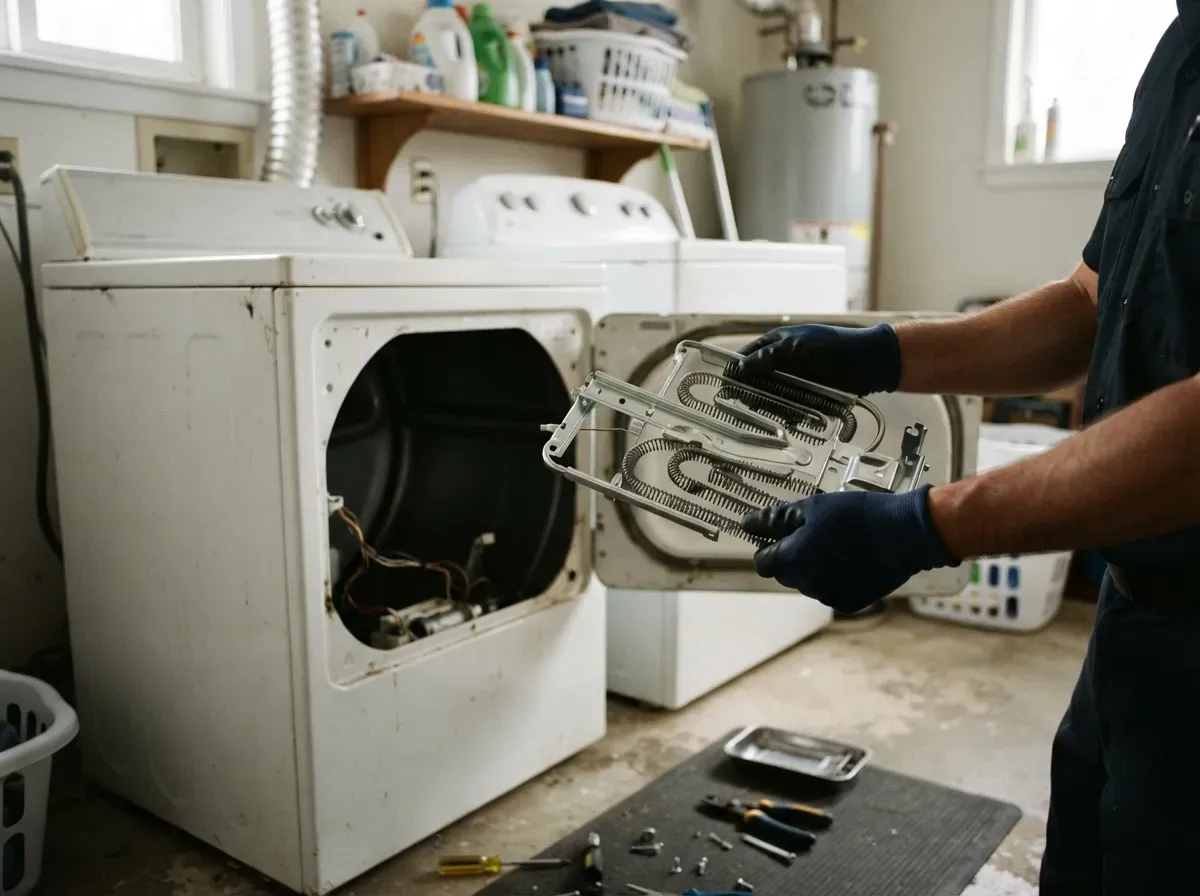
What raises an appliance repair price
| Factor | Why it adds cost |
|---|---|
| The part | Control boards, compressors, drive motors and magnetrons cost far more than fuses, switches, igniters and valves. |
| Sealed-system work | Refrigerant leaks and compressor jobs on fridges and freezers need special equipment and EPA Section 608 certification. |
| Access | Built-in fridges, stacked laundry, wall ovens and over-the-range microwaves take longer to pull out and put back. |
| Parts on order | Some parts aren’t kept on the truck, which can mean a second trip to finish. |
| Brand and model | Pro-style and imported models often use pricier parts with longer lead times. |
What keeps it down: a clear description on the call (model number, code, how long it’s been happening) so the likely part is on hand for the first visit.
How long household appliances last
The most-cited lifespans still come from the National Association of Home Builders’ 2007 study of home components. They’re old figures and they assume average use, but they’re a reasonable yardstick:
| Appliance | Typical life (NAHB, 2007) |
|---|---|
| Gas range | 15 years |
| Refrigerator | 13 years |
| Electric range | 13 years |
| Dryer, gas or electric | 13 years |
| Freezer | 11 years |
| Washer | 10 years |
| Dishwasher | 9 years |
| Microwave | 9 years |
The study notes that life depends heavily on use. Hard water and long hot summers are part of that use, so treat these as averages rather than promises.
Repair or replace an appliance: the half-the-price rule
Consumer Reports has long suggested a simple test: don’t spend more than half the cost of a new appliance on repairing an old one. Combine that with age:
- Young appliance, any repair short of a major failure: repair.
- Past about half its typical life, small part (fuse, switch, valve, igniter, pump): usually repair.
- Near or past its typical life, major part (compressor, sealed system, drive motor, control board): compare the repair price against a new one before deciding.
- Built-ins and over-the-range units: lean toward repair, since replacing them adds installation work.
The tech can tell you what failed and what the repair involves before you decide, and you only pay for work you agreed to.
Keeping appliance repair costs down
- Change the fridge water filter on schedule and clean the condenser coils once or twice a year.
- Clean the dryer lint screen every load and have the vent run checked yearly.
- Keep dishwasher rinse aid topped up; in hard water it protects the heater and spray arms as well as the glasses.
- Don’t keep running an appliance that’s making a new noise. A worn bearing or a jammed pump turns into a bigger repair if it keeps going.
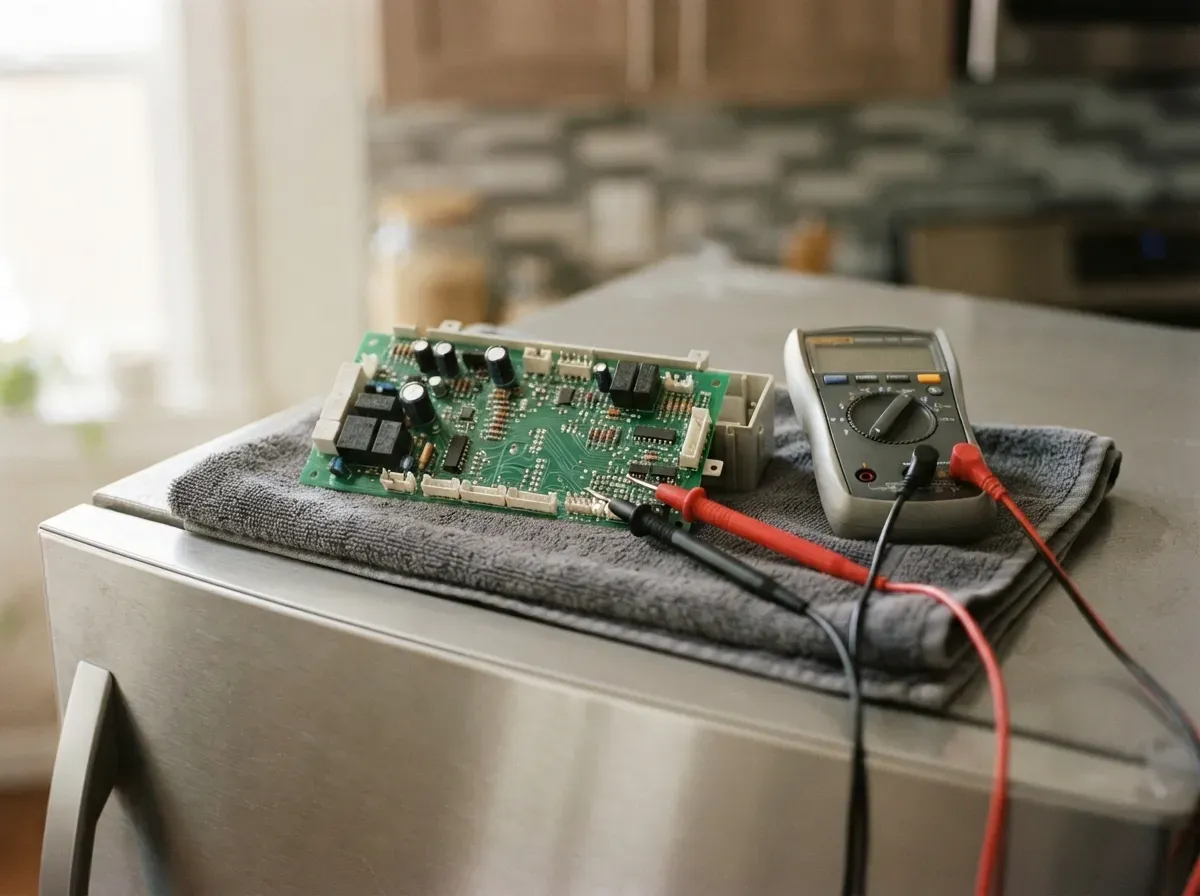
Appliance repair cost questions
Does the diagnosis cost extra if I go ahead with the repair?
Ask that when you call, since it depends on the appliance and the job. You'll know where you stand before the visit, and you only pay for work you agreed to.
Why do two repairs on the same appliance cost so differently?
The part. A dryer thermal fuse and a dryer drive motor are both "dryer won't run" repairs, but the parts are far apart in price and the motor takes longer to reach.
What if the appliance is still under warranty?
Mention it on the call with the purchase date. A manufacturer or store warranty can change how the repair is handled, so it's worth knowing before the visit.