
Refrigerator Repair in San Antonio, TX
Refrigerator repair for San Antonio homes and garages. An insured appliance tech finds why the fridge won't hold 40°F and replaces the failed part.
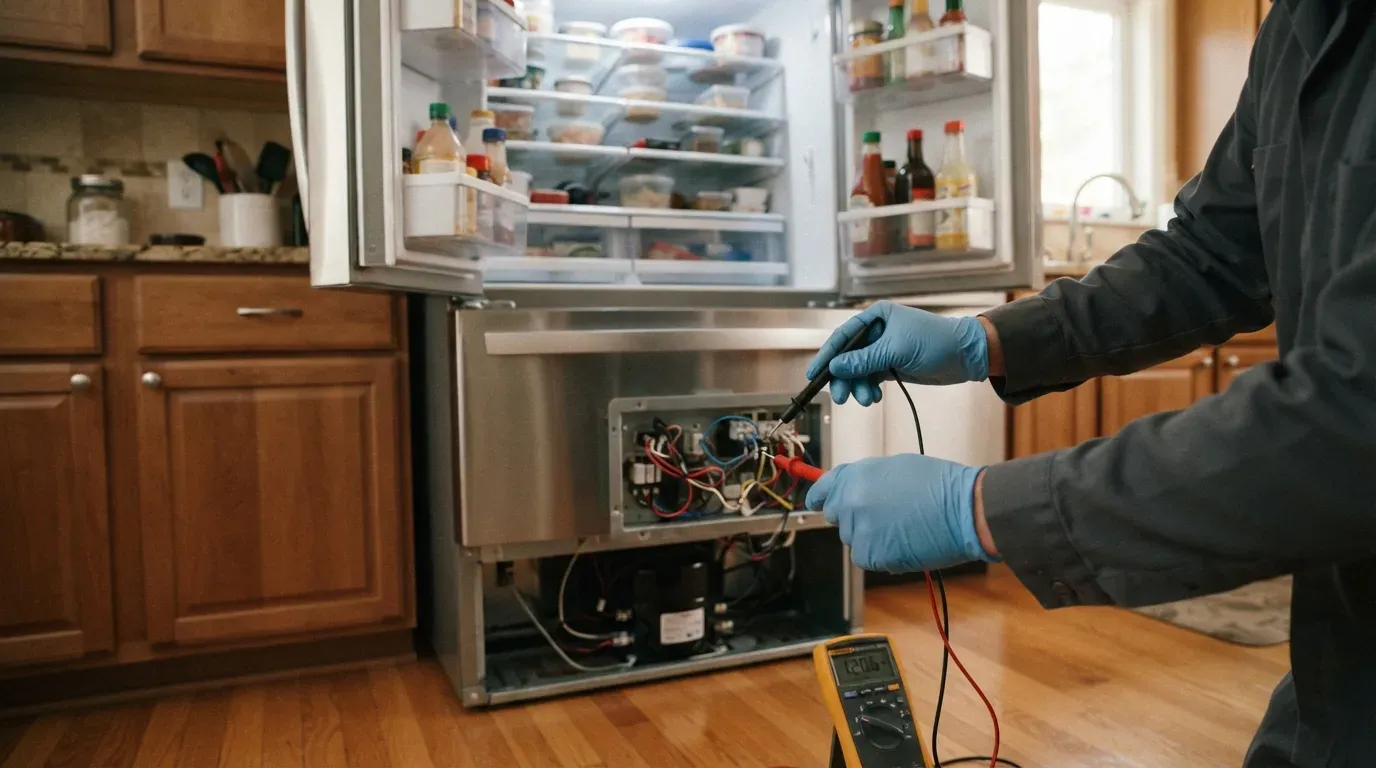
Hire Appliance Pros San Antonio sets up refrigerator repair for French-door, side-by-side, bottom-freezer and top-freezer models across San Antonio, Converse, Universal City and the JBSA bases. An insured appliance tech comes to the house, finds why the fridge isn’t holding temperature, and does the repair you approve.
The target inside is 40°F or colder in the fresh-food side and 0°F in the freezer. A fridge that drifts to 45°F still feels cool to the hand, so a cheap thermometer on the middle shelf tells you more than opening the door does.
Refrigerator running warm in summer heat
San Antonio’s airport averages about 122 days a year at 90°F or hotter, with an average August high of 96°F. A refrigerator sheds the heat it pulls out of the box through condenser coils, usually under the front grille or across the back. When those coils are coated in dust and pet hair, or the condenser fan is slowing down, the fridge keeps up in winter and falls behind once summer sets in.
Placement makes it worse. A fridge pushed tight into a cabinet opening, set beside the range, or running in a garage or a laundry room without air conditioning is working against hotter air than the kitchen. If yours lives somewhere like that, say so on the call.
Freezer cold but the refrigerator side warm
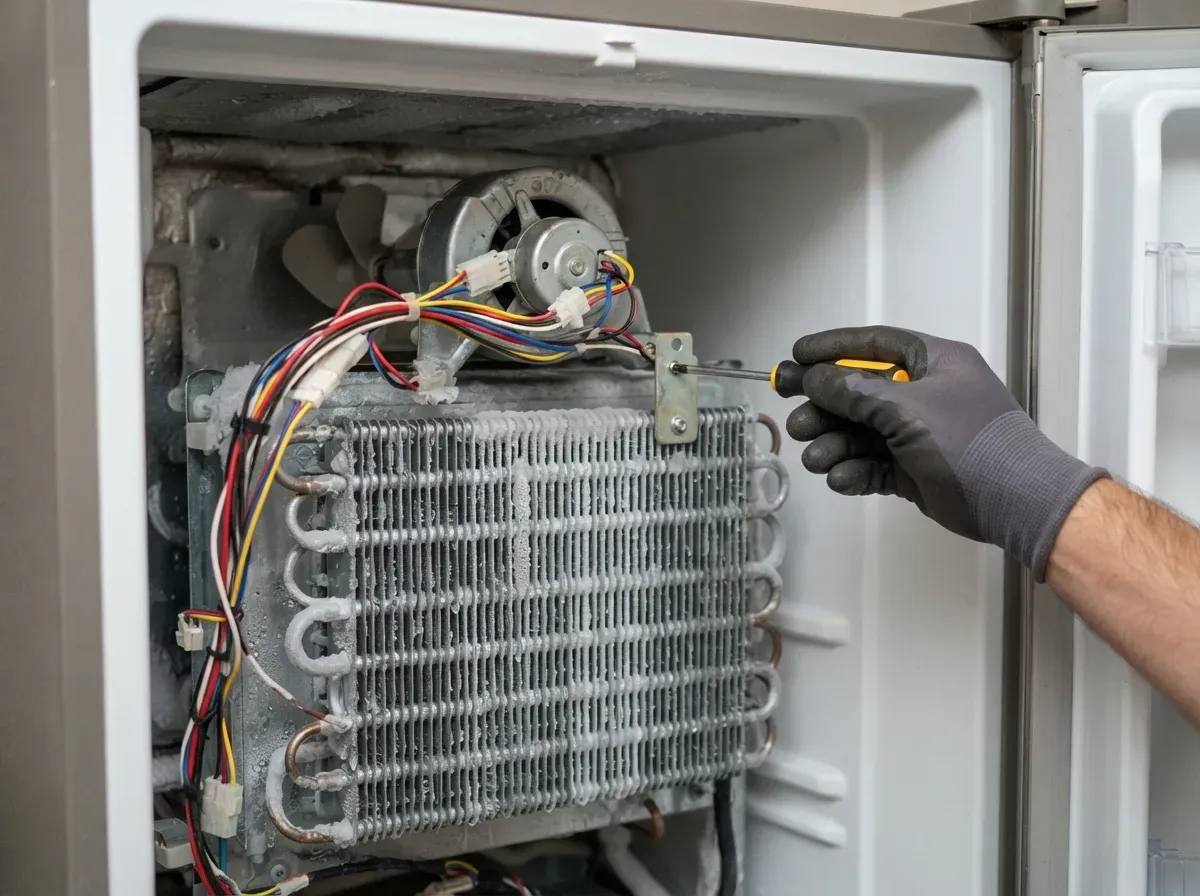
This is the classic defrost failure. Every self-defrosting fridge has an evaporator coil behind a panel in the freezer, and a heater melts the frost off it a few times a day. If the heater, the defrost thermostat or the control fails, frost packs the coil until air can’t move through it. The freezer stays cold because it sits right next to the coil. The fresh-food side, which depends on that air, warms up.
Signs you’ll notice:
- A wall of frost on the back panel of the freezer
- The fridge side warming over a day or two, not all at once
- A fan you can hear struggling, or no fan sound at all when the door switch is pressed
The tech checks the evaporator fan, the defrost heater and the defrost thermostat with a meter, and looks at the control board that runs the cycle.
Refrigerator leaking water under the crisper drawers
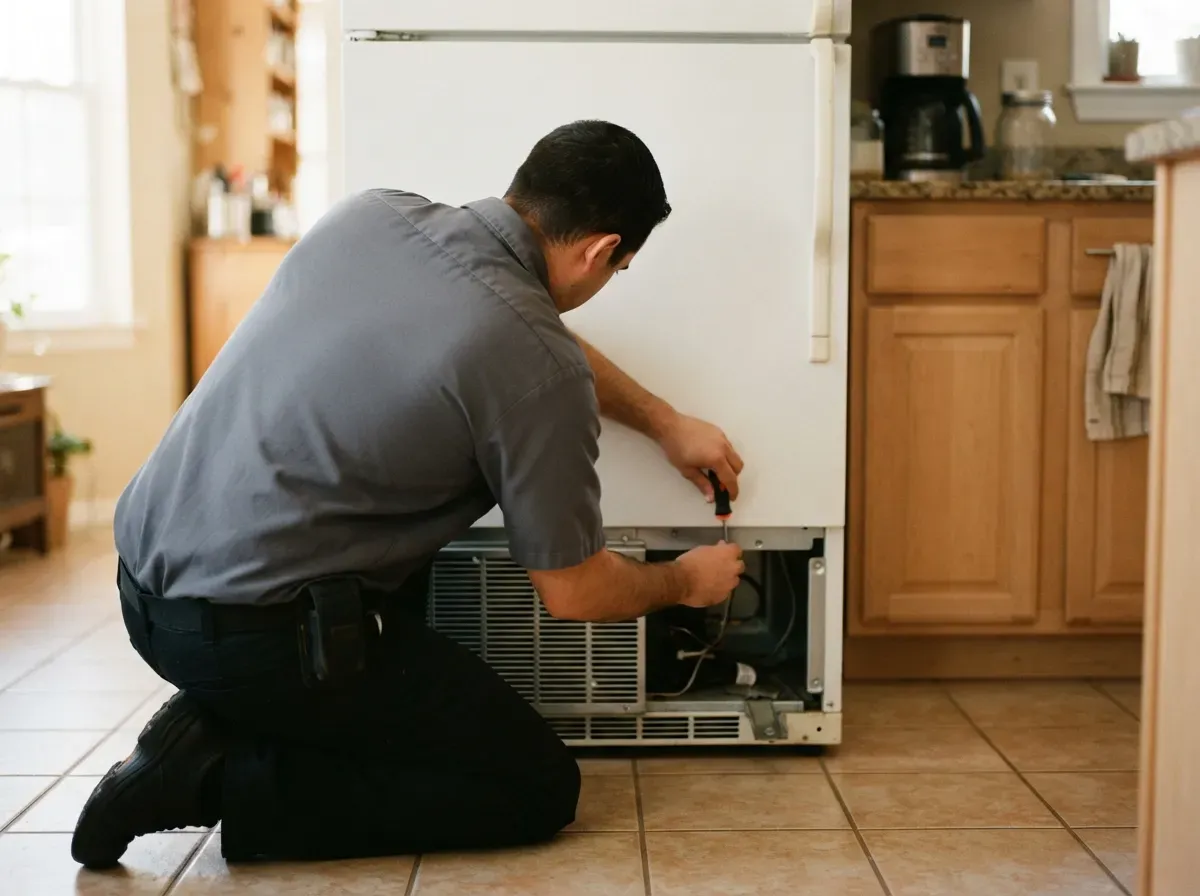
Water pooling under the drawers or leaking onto the floor usually comes from a frozen or clogged defrost drain. The melt water from each defrost cycle runs through a small tube to a pan under the fridge. When the tube freezes or clogs, that water backs up into the box instead. On fridges with a water dispenser, a cracked fill line or a loose fitting at the inlet valve behind the fridge is the other common source.
Refrigerator clicking, buzzing or won’t start
A click every few minutes with no hum after it often points at the start relay or the overload on the compressor. A loud buzz or rattle can be a condenser fan blade hitting debris. Silence with the light still on can be a control board, a thermistor or the compressor itself. These sound similar on the phone, which is why the tech tests them in person before calling it.
Refrigerator repair visit: coils, fans, defrost and compressor
The visit starts with temperatures: fresh-food side, freezer and the air coming off the coils. From there the tech works through the cooling path in order, which keeps a good part from being swapped on a guess:
- Condenser coils and condenser fan
- Evaporator fan and the airflow vents between the freezer and the fridge
- Defrost heater, defrost thermostat and the timer or control
- Thermistors and the main control board
- Start relay, overload and compressor draw
Sealed-system work (a refrigerant leak, a failed compressor, a blocked capillary tube) is a bigger job, and the tech will tell you before anything starts whether it’s worth doing on your fridge. Texas exempts household refrigerator work from the state’s air conditioning license; the disclaimer page covers which rules do apply.
Repair or replace a refrigerator
A standard refrigerator lasts about 13 years by the industry figures the home builders’ association published in 2007. A fan, a defrost part, a thermistor or a water valve is usually worth fixing on a fridge younger than that. A sealed-system failure on an older, lower-priced top-freezer is the case where replacing often wins. The repair cost guide walks through the math.
Keeping food cold until the refrigerator repair
- Keep the doors shut as much as you can. Move what you need into a cooler.
- Pull the bottom grille off and look at the coils. If they’re furred with dust, mention it.
- Leave the fridge plugged in unless it smells hot or the breaker trips, so the tech can see the problem running.
Refrigerator repair questions
How long will food last in a fridge that stopped cooling?
About four hours if you keep the door shut, according to the CDC. After that, perishables like milk, meat and leftovers should go. The food safety guide has the full list.
Why is the freezer cold but the fridge side warm?
Usually a defrost problem or a stalled evaporator fan. Frost blocks the air path that carries cold from the freezer into the fresh-food side. It's one of the most common refrigerator repairs, and it's usually not the compressor.
My fridge runs all the time in summer. Is that normal?
Some extra run time on a 100°F day is normal. Running nonstop while the inside creeps above 40°F isn't, and dirty condenser coils or a weak condenser fan are the first things the tech checks.
Can a tech fix a refrigerant leak?
Sealed-system work (refrigerant, compressor, evaporator coil) needs EPA Section 608 certification. Say if you hear hissing or see oily spots near the back when you call, so the visit is set up for it.