
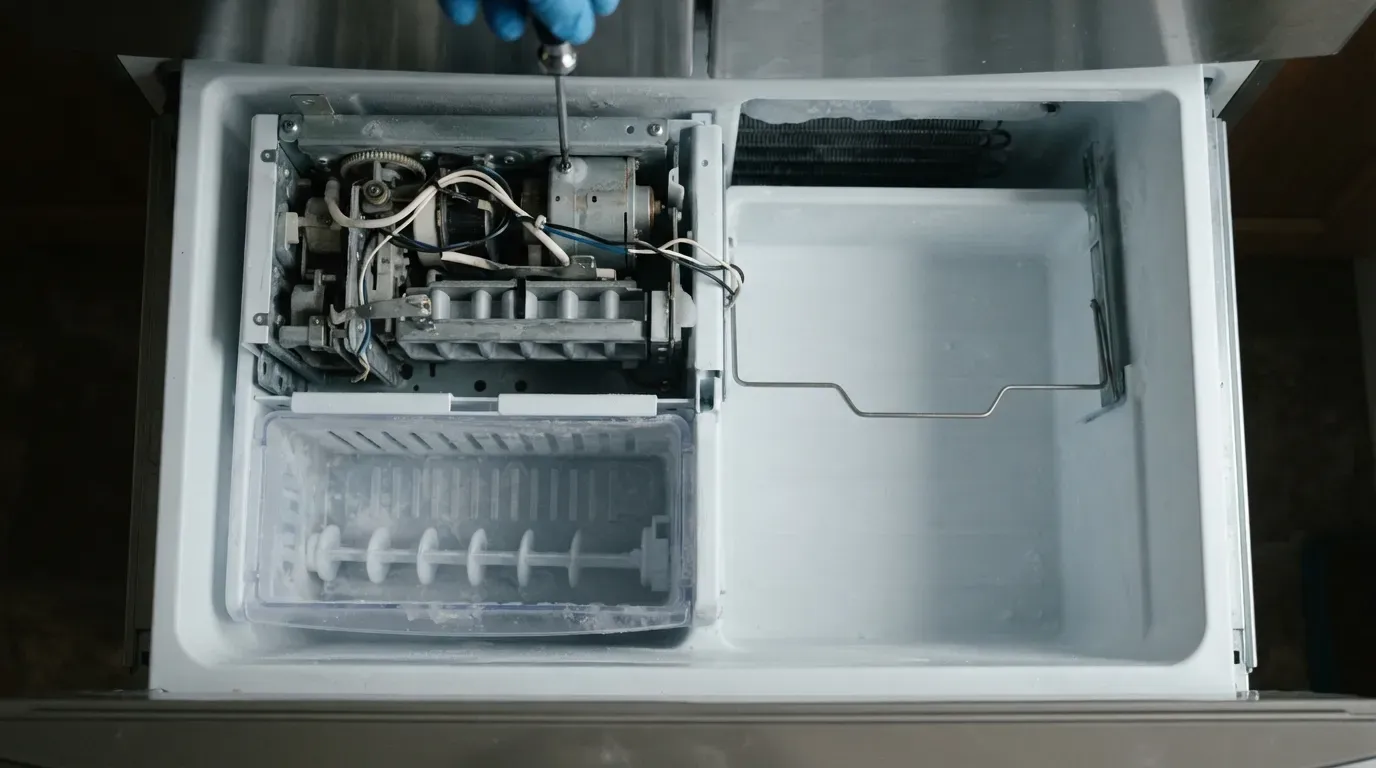
Ice Maker Repair in San Antonio, TX
Ice maker repair for refrigerator ice makers in San Antonio, starting at the fill valve where hard water builds scale. Call with the fridge model.
Hire Appliance Pros San Antonio sets up ice maker repair for refrigerator ice makers (in the freezer, in the door, or in a drawer) across San Antonio, Converse, Universal City and the JBSA bases. An insured appliance tech finds out why the bin isn’t filling and makes the repair you sign off on.
Most ice makers stop for one of a handful of reasons, and in San Antonio one of them shows up more than it would in a soft-water city: mineral scale. SAWS puts its typical hardness at 15 to 20 grains per gallon. That calcium deposits inside the small screen and passages of the water inlet valve, and a valve that used to fill the mold in seconds starts short-filling it.
Ice maker not making ice
Check the obvious first: the shutoff arm or switch should be in the on position, and the freezer should read near 0°F. An ice maker won’t release cubes until the mold gets cold enough, so a warm freezer can look like a dead ice maker. If those are fine, the cause is usually one of these:
- Frozen fill tube. The short tube that carries water into the mold can freeze solid, often after a slow-dripping valve or a power blip. Water stops reaching the mold even though everything else works.
- Inlet valve. The valve behind the fridge has a solenoid for the ice maker. A failed coil or a scaled-up screen stops the flow.
- Ice maker module. The motor, the thermostat and the harvest control live in one unit on most models, and they wear out.
- Water filter. An overdue filter restricts flow to both the dispenser and the ice maker.
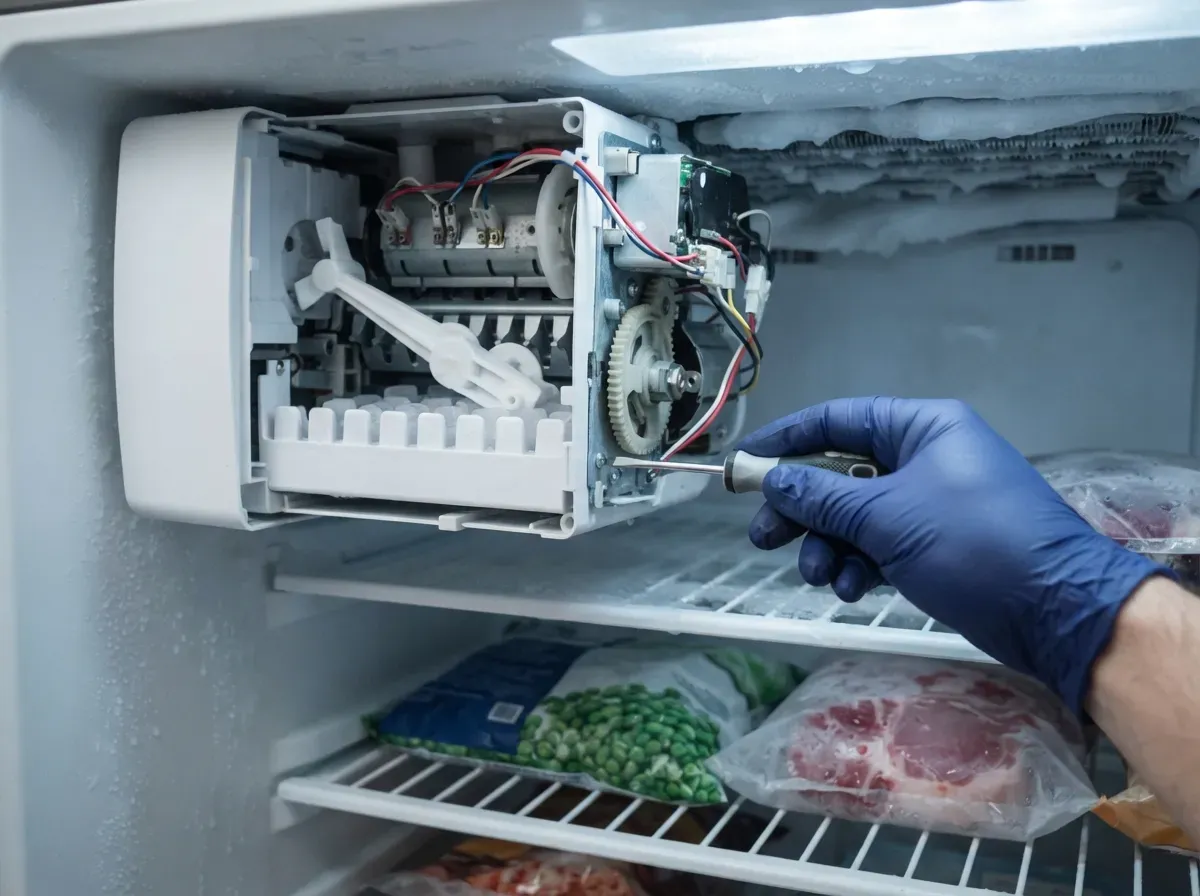
Ice maker making small, hollow or clumped cubes
Undersized or hollow cubes mean the mold is being short-filled: low pressure at the valve, a filter past its date or a partly blocked valve screen. Cubes fused into one block usually mean water is dripping into the mold between cycles from a valve that doesn’t close all the way, or the freezer is cycling warm and cold.
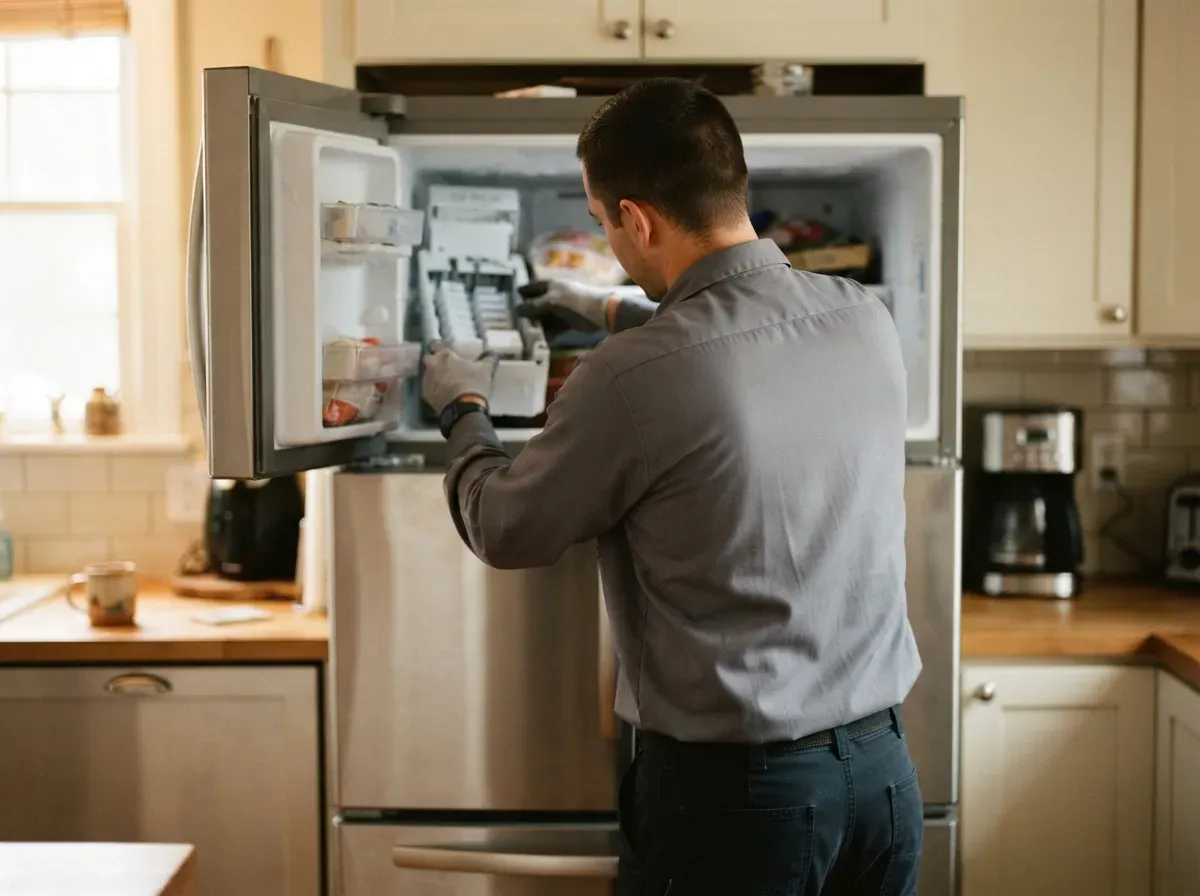
Ice maker leaking or jamming the chute
A leaking fill valve, a cracked fill tube or a mold that overfills can drip water that freezes on the freezer floor or jams the dispenser chute. Door ice makers on French-door fridges have their own trouble spot: the ice compartment seal and its small heater, which keep the door chute from frosting shut.
Ice maker repair from the filter to the mold
The tech confirms freezer temperature, then works back along the water path: filter, inlet valve, the line to the ice maker, the fill tube, and the ice maker module itself. Valve output gets checked against the manufacturer’s spec, which is a quick way to tell a weak valve from low house pressure. On a valve that’s scaled inside, replacing it is the usual repair.
Preventing ice maker scale in hard water
Changing the filter on schedule protects the valve as much as the ice. If you run a whole-house water softener, ice makers and dishwashers see far less scale. The hard water guide covers what SAWS water does inside each appliance.
Ice maker repair questions
Why does my ice maker make small or hollow cubes?
The mold isn't getting a full fill. That usually means low water pressure at the valve, a clogged water filter or a fill valve partly blocked by scale. Hard water speeds up the last one.
How often should the fridge water filter be changed?
GE's guidance is about every six months, or sooner if water or ice slows down. A filter well past its date is one of the most common reasons an ice maker stops.
The water dispenser works but there's no ice. What does that mean?
Water is reaching the fridge, so the problem is past the dispenser branch. The usual suspects are a frozen fill tube, the ice maker's own valve side, the ice maker module or a freezer running too warm to finish a cycle.