
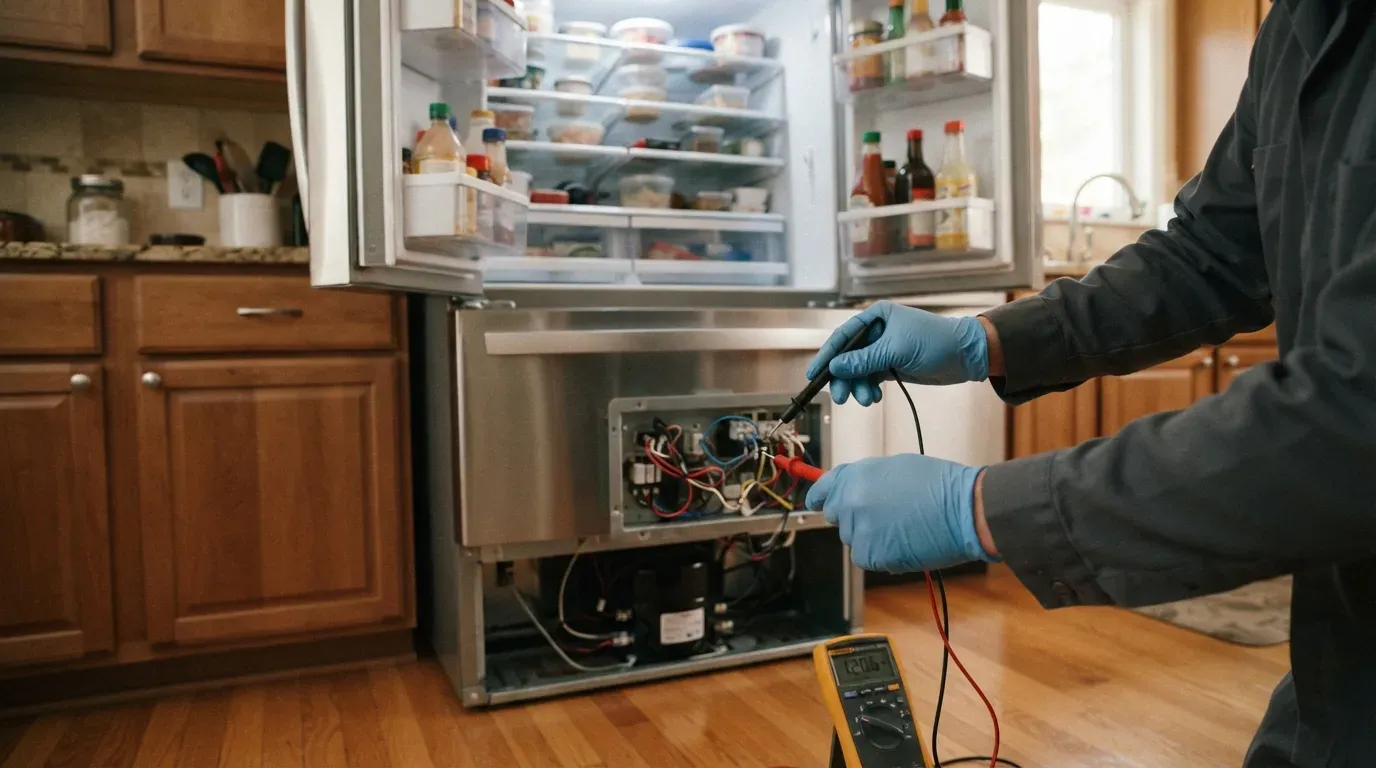
Refrigerator Stopped? San Antonio Food Safety and Repair
Refrigerator or freezer repair can wait a few hours if the doors stay shut. Here's what food to keep, what to toss and when to call.
When a refrigerator stops cooling or the power goes out, the clock that matters is time above 40°F. The CDC’s guidance is simple: a refrigerator keeps food safe for about four hours with the door closed, a full freezer holds for about 48 hours, and a half-full one for about 24. After that, perishable food in the fridge should be thrown out.
San Antonio saw this on a large scale in 2021. During the February 2021 winter storm, the temperature at the airport dropped to 9°F on February 15, and on February 17 about 280,000 CPS Energy customers were without power. A long outage in a summer storm puts food at the same risk.
First hour after the refrigerator or power fails
- Keep the doors shut. Every opening lets cold air out. Decide what you need, then open once.
- Put a thermometer inside both the fridge and the freezer if you have one. Temperature is what decides what’s safe, not how long you guess it’s been.
- Pack the freezer tight. Move items close together; a full freezer stays cold longer.
- Add ice. Bags of ice or frozen water bottles in the fridge buy time.
- If the fridge failed but the power is on, move the most perishable food to a cooler with ice or a working fridge, and call to set up the repair.
Which refrigerated food to keep or toss
| Item | After more than 4 hours above 40°F |
|---|---|
| Raw or cooked meat, poultry, seafood | Toss |
| Milk, cream, soft cheese, yogurt | Toss |
| Leftovers and cooked dishes | Toss |
| Eggs and egg dishes | Toss |
| Hard cheese, butter | Usually keep |
| Whole fruits and raw vegetables | Usually keep |
| Condiments like ketchup, mustard, jelly | Usually keep |
For the freezer: anything that still has ice crystals or reads 40°F or below can be refrozen. Anything that thawed and sat warm for more than two hours goes.
When in doubt, throw it out. Smell and taste don’t tell you whether food is safe.
Refrigerator stopped with the power still on
If the house has power but the fridge doesn’t, the clock is the same and the fix is a repair. A few patterns point at the likely cause:
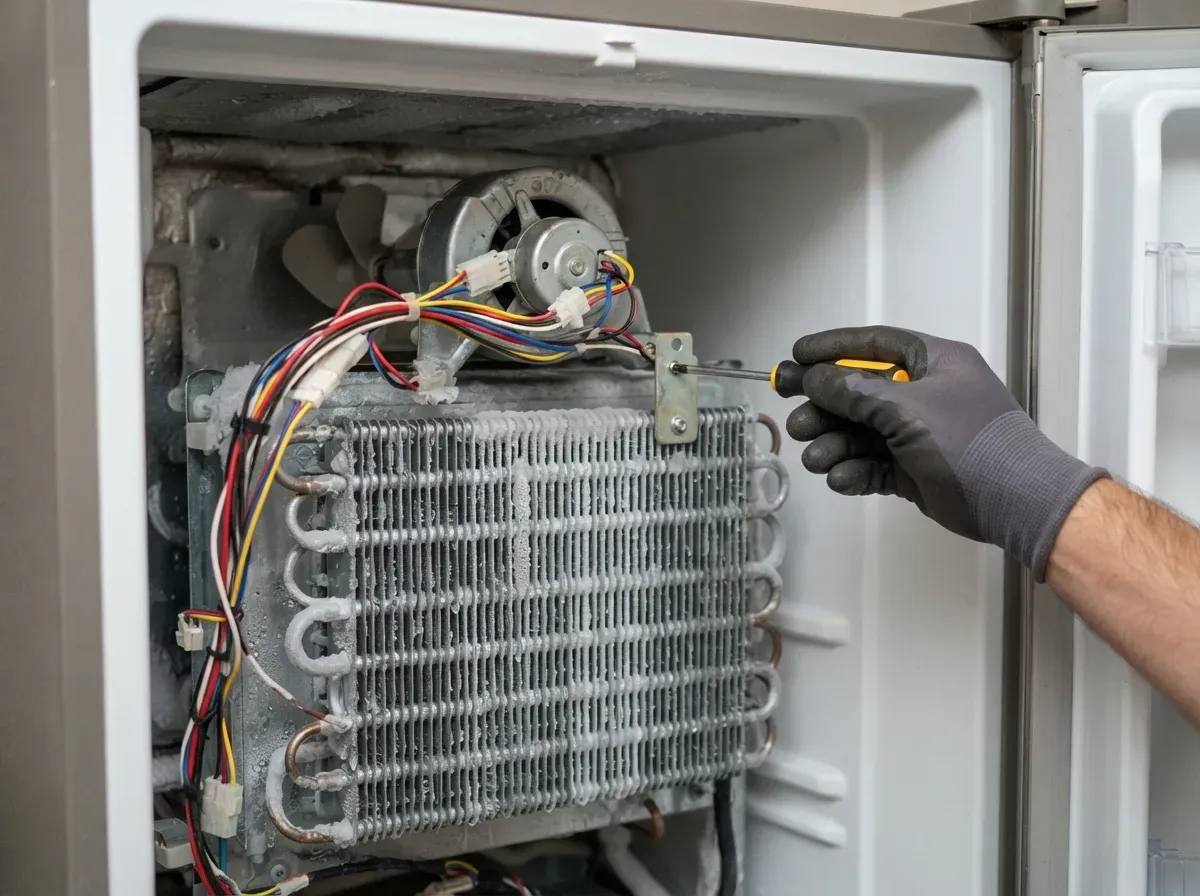
- Freezer cold, fridge side warm: usually a defrost problem or a stalled fan, covered on the refrigerator repair page.
- Both sides warm, compressor clicking: a start relay or compressor problem.
- Dead quiet, light still on: a control or thermostat.
- Freezer only, in the garage: see the freezer repair page.
Refrigerator and freezer problems after a long outage
Appliances don’t always restart cleanly when power comes back, especially after flickers and brownouts. If the fridge or freezer is still warm the next morning, or the ice maker stays empty, it’s worth a visit.
Refrigerator food safety questions
Can I refreeze food that thawed in the freezer?
Per the CDC, food that still has ice crystals or reads 40°F or below can be refrozen, though quality may drop. Food that sat above 40°F for more than two hours should go.
Is it safe to taste food to see if it's spoiled?
No. Bacteria that make people sick often don't change the smell or taste. Go by temperature and time, and when in doubt, throw it out.
My fridge came back on after the outage. Do I still need a repair?
Not if it's back to 40°F or below within a few hours and holding there. If it's still warm the next morning, or the freezer is fine but the fridge side isn't, something didn't restart properly and it's worth a visit.