
Hard Water and Appliance Repair in San Antonio
Dishwasher, ice maker and washer repairs here often trace back to hard water scale. Here's where it builds up first and what slows it down.
San Antonio’s tap water is hard. The San Antonio Water System puts its typical hardness at 15 to 20 grains per gallon, which is in the very hard range. SAWS says the calcium carbonate comes naturally from the Edwards and Trinity aquifers, and in 2025 about 47 percent of the water SAWS customers used came from the Edwards, a limestone aquifer.
For appliances, hard water means scale: a chalky mineral layer that builds up wherever water sits, heats or passes through a small opening. That’s why the same few parts fail early in hard-water homes.
Hard water damage in dishwashers
A dishwasher heats water, sprays it through small holes and dries it on glass. All three invite scale. Whirlpool’s help pages say water at 15 grains or more can damage a dishwasher and strongly recommend a water softener at that level, and SAWS water is usually at or above it.
Where it shows up:
- White film and spots on glasses, the first sign most people notice
- Clogged spray arm holes, which leave dishes dirty on one rack
- Scale on the heating element, which slows heating and drying
- A sluggish inlet valve, which short-fills the tub
Rinse aid helps more than people expect. It lets water sheet off instead of drying in drops, and KitchenAid’s guidance is to raise the rinse aid setting when hard-water spots show up. The dishwasher repair page covers the failures themselves.
Hard water in ice makers and refrigerator water lines
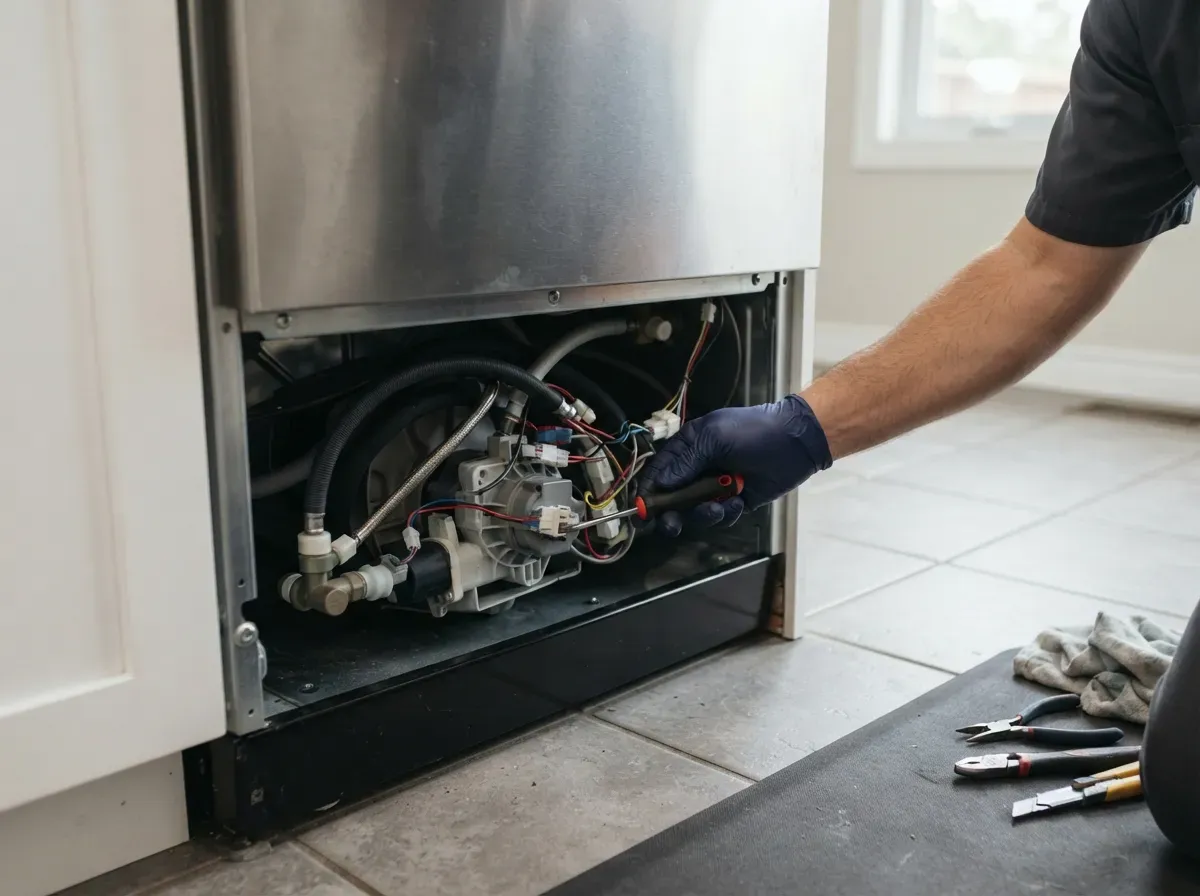
The refrigerator’s water inlet valve has a fine screen and a narrow passage. Scale there slows the fill, which shows up as small or hollow cubes and an ice maker that can’t keep up. The water filter catches some of it, which is one reason GE suggests changing the filter about every six months. The ice maker repair page explains what the tech tests.
Hard water in washers
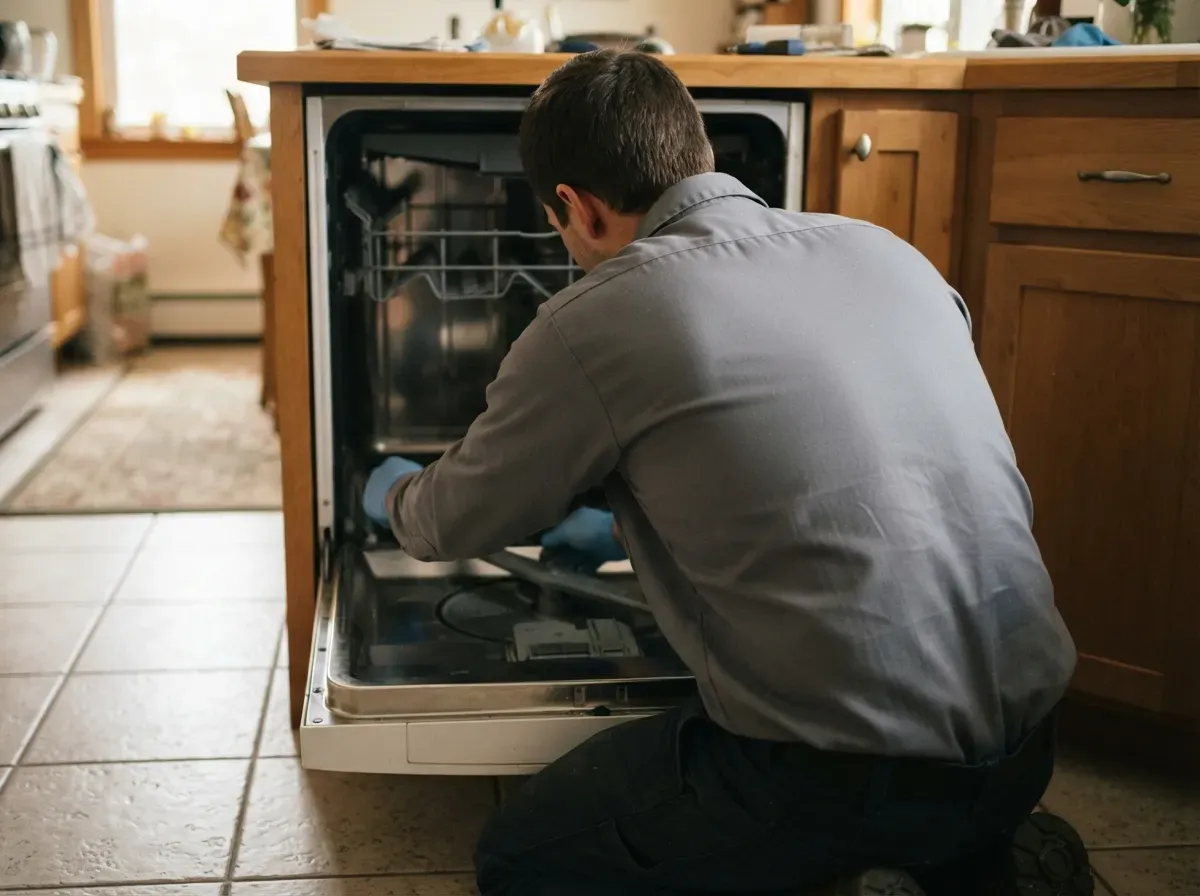
Washer inlet valves have screens where the hoses connect, and mineral and grit collect there. A washer that fills slowly or only on one temperature often has a clogged screen or a valve that’s failing. Detergent also works less well in hard water, so loads can come out dingy and the door gasket on a front-loader collects more residue.
Slowing hard water scale in appliances
- A whole-house water softener is the biggest single fix. It treats everything at once, from the dishwasher to the washer to the fridge line.
- Rinse aid in the dishwasher, kept full and set higher in hard water.
- Regular filter changes on the refrigerator.
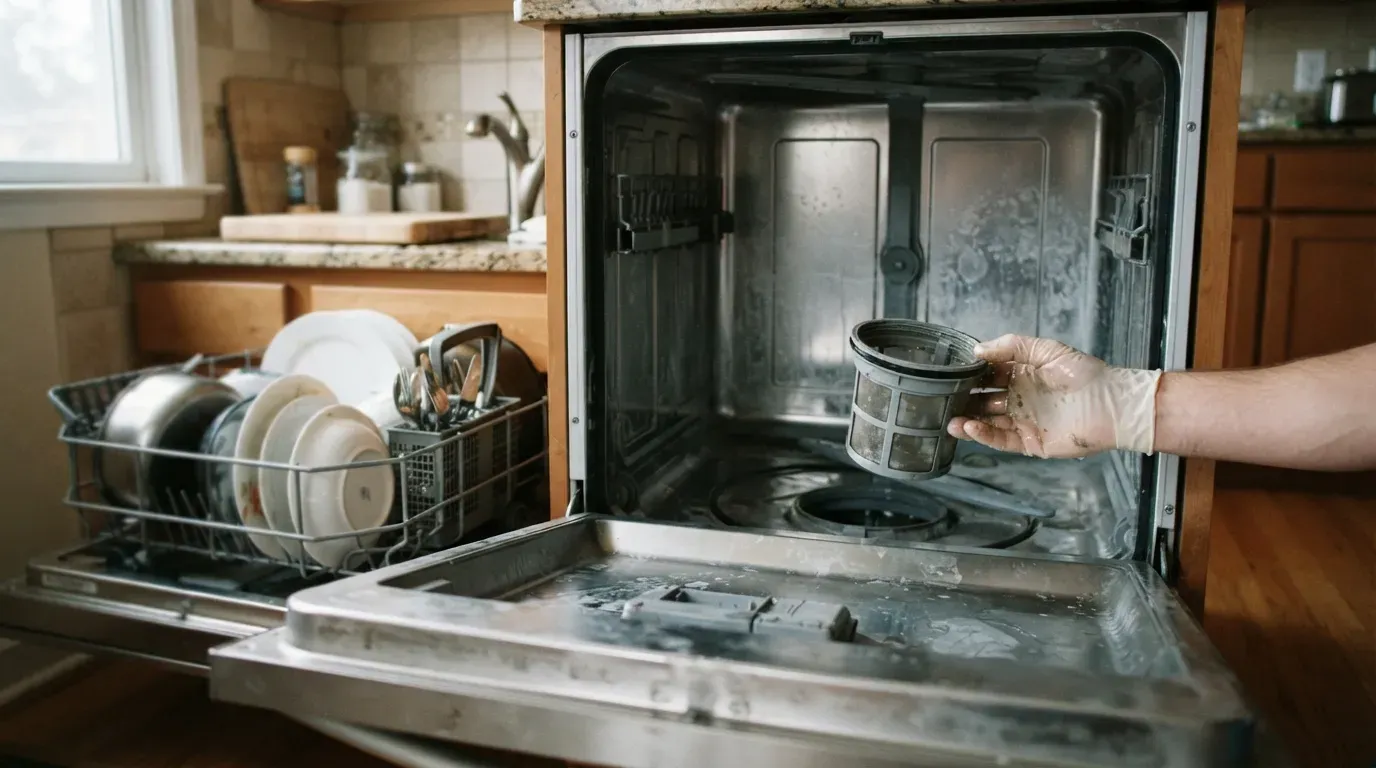
- Cleaning the dishwasher filter every month or so, before scale and food bind together.
- The manufacturer’s descaling or cleaning cycle where your washer or dishwasher has one.
None of these will undo damage that’s already done. A valve that’s scaled shut or a heater that’s failed needs a repair.
Hard water and appliance questions
Does a water softener make appliances last longer?
It cuts the scale that clogs valves, coats heaters and blocks spray arms, which are common failure points in hard water. It won't fix a part that has already failed.
My dishwasher still spots glasses with rinse aid. Now what?
Check that the rinse aid setting is turned up, not just that the dispenser is full. If spots stay, the heater may not be bringing the water up to temperature, which the tech can test on a visit.
Should I use vinegar in my dishwasher or washer?
Follow the manufacturer's manual for your model. Some recommend a specific descaler or cleaner, and some warn against using things in the machine they weren't built for.